Ditch Multitasking: Boost Your Productivity Instead
Are you someone who prides themselves on their ability to multitask? Do you feel like you’re getting more done when you juggle multiple tasks at once? Unfortunately, research shows that the opposite is true. Multitasking can lead to a decrease in productivity and cognitive ability. But don’t worry, there’s a better way!
In this blog post, we’ll dive into the science behind multitasking and why it’s not as efficient as we once thought. Learn why multitasking is a myth and how you can enhance your productivity. We’ll explore the downsides of multitasking and how it can impact your work life. But most importantly, we’ll provide you with practical tips and techniques to transition from multitasking to single-tasking. You’ll learn personalized strategies for ADHD business owners and when it’s actually helpful to multitask. So let’s ditch multitasking and boost our productivity instead!
Understanding what multi-tasking is…
Multitasking, in its simplest form, refers to the act of handling more than one task simultaneously.

Sound good right? Two tasks for the price of one.
On the surface, yes, it does. If I could do 10 tasks at once I would be the consultant/wife/mother of the century… but the fact is, I am human… and human’s CANNOT actually multi-task, even if that’s what they want you to think.
What is the definition of multi-tasking?
The concept of multitasking is often misunderstood. It is believed to be the ability to juggle multiple tasks simultaneously, but there is much research shows that it leads to burnout, distraction, and reduced productivity at the end of the day.
In reality, true multitasking is a myth as our attention and focus cannot be divided efficiently.
The Impact of Multitasking on Productivity
So let’s talk about multi-tasking in the lens of productivity. The whole POINT of multi-tasking is to be productive right?
That is the part that is the myth… multitasking makes you less productive. Sorry old boss!
Multi-tasking for a human is actually the same exact thing it is for a computer, it’s not multi-tasking, it’s task SWITCHING.
(On a separate note, computers memories and processing has improved exponentially year over year, but our human brains have NOT so it’s not even a fair comparison to make)
It is literally impossible to focus on two tasks at once. Like the aforementioned computer, you are just switching your attention from one task to the next. When this happens you get “attention residue” which is the lingering effects of a previous task on our ability to FOCUS and perform well on subsequent tasks.

When we switch between tasks, some of our attention remains on the previous activity and hinders our performance on the new task. This phenomenon is particularly relevant in today’s world, where we are constantly bombarded with distractions from various sources such as emails, notifications, social media and the Slack sound constantly going off.
The cognitive consequences of multitasking are also far-reaching, impacting individuals’ ability to effectively manage previous tasks while transitioning to new ones. The key word here is “effective”. Managing something effectively means being able to be fully absorbed and focused on every aspect of it in order to make sure everything is accounted for. (Read – detail oriented)
This, in turn, affects the productivity of knowledge workers, creating a false sense of being a great multitasker. In reality, the distractions caused by notifications on the cellphone, laptop, or even the dog under the desk hinder the seamless transition from one task to another. As a result, multitasking mismanagement becomes a significant challenge for individuals striving to excel in their endeavors. Recognizing the detrimental impact of multitasking is the first line of defense in reclaiming focus and productivity, enabling individuals to break free from the multitasking myth and adopt a more effective approach to task management.
Now imagine all of that as an ADHD individual who is already dealing with racing thoughts, executive functioning challenges and getting through the “boring stuff” so they can chase the dopamine.
Understanding how multi-tasking myth concept is crucial for anyone looking to optimize their work habits and improve efficiency.
What is the draw of multi-tasking why do so many people do it?
Many people are drawn to multitasking because they believe it increases efficiency and productivity.
Actually, I believe it’s because of 2 reasons: 1. We have been trained through smartphones and devices to react to competing stimuli immediately and 2. because we are constantly chasing the dopamine that comes with “discovering” something new that needs our attention.
Example: We are waiting for a file to load or a program to open on our computer. While we are waiting, we hear a “ping” from some device, or the computer itself to let us know that we have a message. While we are still waiting for the computer, or person, or whatever to finish a task we think “why don’t I just check on the message to see what it needed”. Suddenly you are going down a rabbit-hole
However, studies have shown that the human brain is not built for multitasking. Multitasking is actually a myth, as it leads to attention residue and negatively impacts working memory, ultimately reducing overall productivity.
The Illusion of Efficiency: Exploring the Downsides of Multitasking
Despite the natural tendency to get more done in less time, our brains just are not meant for multitasking Studies have shown that working memory suffers when switching between tasks. There are times when there seems that we have to multi-task… At this moment I’m listening to my son practice piano while I’m writing this blog for example… but when I REALLY need to focus… I take steps to make sure my brain can focus on that one thing.

Multitasking is a Myth: The Ultimate Guide to Getting More Done (By Doing Less) <<<asdf Picture of someone thinking really hard>>
Burnout is a common result of too much multi-tasking. Burnout, a form of exhaustion that can come from the mental and emotional fatigue of “trying to do it all” and constantly feeling swamped by all of the responsibilities you or your job requires from yourself. It’s the result of excessive stress… which can come from constantly trying to do ALL. THE. THINGS.
You can see how multi-tasking though not the only cause of burn-out can definitely add to the feeling of overwhelm and panic.
Surprisingly, multi-tasking can actually lead to decreased productivity as our brain switches between tasks. I know, it’s funny how something we do because we want to get more done in less time actually causes us to go SLOWER in our attempt to check everything off of our to-do lists. Our brain switches between tasks so quickly that it can’t hold all the information necessary to remember the pieces needed for each task.
This leads me to the accuracy issue that is tied in with the myth of multi-tasking. Everytime your brain switches tasks, you pay a small “tax” that basically just tires you out and makes you less able to do the deep-thinking that your most valuable tasks require.
Everytime you are QAing an email, double-checking an automation or making dinner you need to make sure you are accurate… or someone could end up with salty cookies.
Multitasking and the Workplace: A Troublesome Partnership
Despite numerous studies demonstrating its detrimental effects, the myth of multitasking still persists in the workplace. Many times (like in my case) it is even celebrated or required for certain roles.
Multitasking actually causes different parts of the brain to function simultaneously, resulting in negative impacts on attention and task performance and therefore is like asking someone to perform at suboptimal level.
The negative consequences of multitasking can be seen through switch cost and the lack of focus when dividing attention, imagine trying to set up a complicated workflow or write a company-wide communication and have constant interruption with emails and phone calls.
This undermines productive time and diminishes the quality of work due to attention residue. Businesses and entreprenuers need to understand that being a great multitasker does not necessarily mean being effective in their jo. Instead, focusing on one task at a time can lead to better results and reduce cognitive strain for effective and a happier team.
A Better Way to Achieve Productivity – Single-tasking
Transitioning from the myth of multitasking to the reality of single-tasking opens up a world of productivity potential. And we all know how productivity can open up your time to spend doing those things you ACTUALLY love.
Embracing single-tasking as a productive time management technique allows knowledge workers to boost their full attention and efficiency on specific tasks.
Why focusing on one thing at a time benefits productivity
Let’s talk about Focus for a moment.

Focus is the act of directing your attention on a single object or activity without letting distractions take it away. All of your mental energy is pointed at a particular task, subject, or thought. With all of your cylinders running in the same direction, you are able to think more clearly and accomplish tasks more effectively.
Being able to focus on one task or one problem at a time not only allows quicker thought, but it allows for deeper thinking and better problem solving or ingenuity than just getting as many tasks done as possible.
This is why meditation and clarity techniques are so effective, especially for those of us that are ADHD and often are thinking about multiple tasks or subjects at the same time. Once we are able to slow down our brain, and our bodies, our ability to problem solve and gain clarity seems to multiply exponentially.
Transitioning from Multitasking to Single-Tasking
Okay, so how do we actually move from Multi-tasking to sitting down and doing 1 thing at a time? In a world where everyone is so busy doing ALL the things, taking the steps to actually FOCUS on a task can seem…. counterintuitive.
When I asked my community about whether they thought multi-tasking was a myth, I got a variety of answers from “If I didn’t multi-task I wouldn’t be able to live my life” to “completely impossible”.
The fact is, we all multi-task and it is part of our everyday lives, but we really need to figure out HOW and WHEN to single-focus task in order to keep the plates spinning, but the deep-thinking work required to solve complex problems, to be able to explain them to others cannot be done simultaneously with other tasks.
Finding the time for those tasks the require the focus, that need deeper thinking is a combination of prioritization and learning how to reduce distractions and single focus on the task at hand. This is a combination of figuring out what available time you have in your day, how to structure it so that you are able to prioritize deep-thinking tasks as well as get the other “smaller tasks” that are also important but don’t need the deep thinking.
Techniques to Enhance Focus and Reduce Distractions
Enhancing focus and reducing distractions is crucial to boosting productivity, but I find that there are so many apps and techniques out there to choose from, it’s difficult to really figure out what will work. The answer is, there is no “one size fits all” to help increase focus for any individual, but some of the items below will help figure out the areas in which you can work in order to reduce the multi-tasking for the areas of your life where it’s needed.
Mindfulness Practice, in addition to being good for your mental health and decrease of burnout, mindfulness practice can be excellent to help focus your energy into one task. It helps trains your brain to focus on the present moment, which can directly improve your ability to concentrate on tasks, especially for those that are ADHD like myself. By clearing away the clutter and reducing stress, it creates a mental environment where creativity and innovative thinking can flourish.
I personally use the “Calm” app to help with my mindfulness practice, as well as play Binural beats when I am writing or need to concentrate.

Prioritization Matrix: While there are quite a few options of matrix to choose from out there, I prefer to keep it simple and constantly refer to the Eisenhower matrix when looking at how to prioritize my tasks.
Every morning I get up, get my cup of coffee and site down to my mindfulness and quick journaling practice where I identify that tasks I need to get done that day and then prioritize them into “Urgent/Important”, “Not-Urgent/Important”, “Urgent/Not-Important” and finally “Not-Urgent, Not Important”.
<<<asdf>>> image of Eisenhower matrix
For more in-depth understanding of the matrix, check out this from ClickUp or my blog on productivity and adhd.
Time-Blocking – Time-boxing, also known as time-blocking, is a time management technique that involves allocating a specific, fixed period of time (a “time box”) to each task or activity. This approach is designed to increase productivity and efficiency by providing a structured way to manage time and tasks.
This technique can be extremely useful to help organize your days in order to use the time that you have wisely. It also can be very eye-opening when you really look at the time you actually have for focused work with everything else that we typically have going on in our lives. From general house and family maintenance, to kid’s activities, to work meetings, to doctors and health appointments… the time we have for actual productive focus is quite small. Make sure you
Minimizing Distractions. I think it goes without saying, that if you minimize distractions you are able to increase your focus. This is sometimes harder to do than you realize. Finding a place where you won’t be disturbed or interrupted (like an office where you can close the door), as well as turning off all unnecessary notifications (I don’t turn off my phone in the case of a phone call from my kids school), will significantly help with this.
ADHD TIP I also find that listening to ambient, lo-fi or binural music on my headphones has been a game-changer to help me focus on 1 mental task at a time, while keeping my brain busy processing the auditory but non-distracting sounds is extremely helpful. Added bonus if you use earbuds or headphones to physically block your ears from external stimuli
When would multi-tasking actually be helpful?
Multitasking can be helpful and sometimes unavoidable in certain situations. While it would be great to live in a perfect world where we can all do one task at a time, it is not our reality… especially if you are a parent or adhd. In fact, it is sometimes necessary to do two things at once to get the benefit of both activities.
I know I know, it is counterintuitive… just keep in mind that It is productive when working on tasks that don’t require full attention or when working on different tasks that don’t overlap.
Doing 2 tasks that don’t both require your focus
When working on tasks that don’t both require your full attention, it actually possible to be productive, but you have to choose the right tasks. Usually this is when one of the tasks is physical in nature, doesn’t require a lot of brain power (exercise, walking, running) and the other is only requires a smaller amount of focus.
For instance, I tend to make dinner while listening to a podcast or audiobook, and I believe that it actually HELPS me to focus on the task at hand as long as what I am listening to doesn’t require me to do equations on my feet. (Translating how many tablespoons go into a 1/4 cup however, I can handle).

As a member of the neuro-divergent community, I also find that when I’m on a meeting, I find it EASIER to understand and absorb the information being presented by either Mind-mapping or doodling or coloring while the meeting is going on. This is because my brain tends to wander when it’s bored (even if I know the information is important), and so I use the power of the physical action of writing and coloring to keep the dopamine in the brain while letting my ears listen and grab onto the concepts.
If you are interested in some of the types of tasks you can do at the same time, I encourage you to read the book “Thinking Fast and Slow”



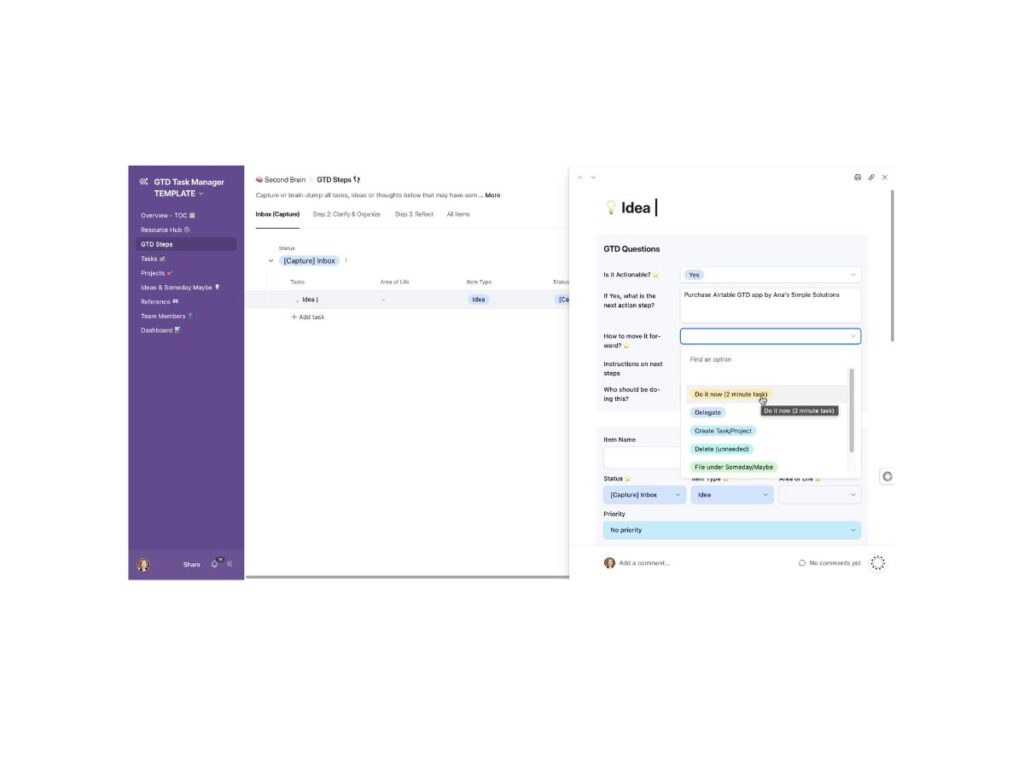
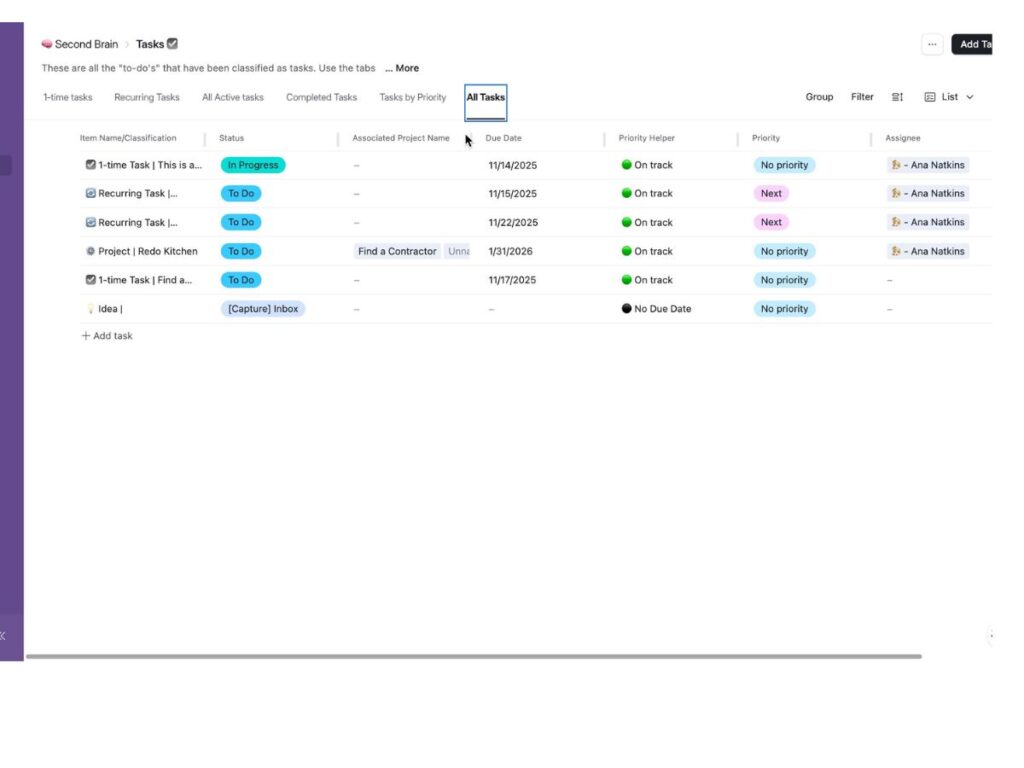
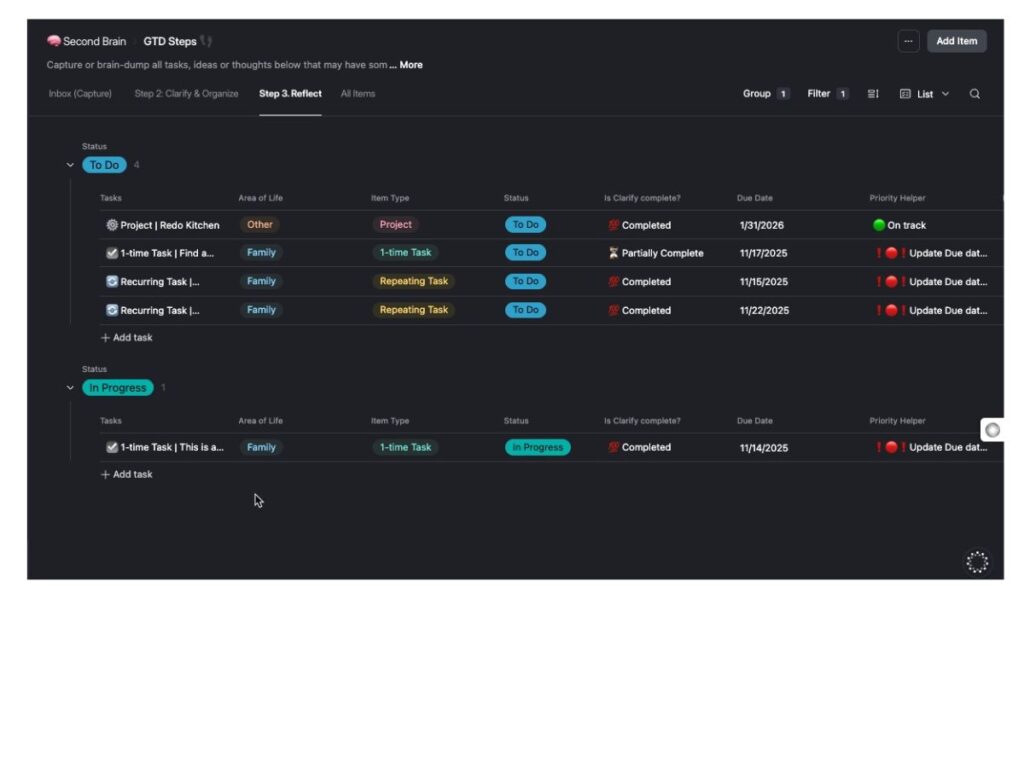 Bonus: Subtasks and Project Linking